
Overview
Hands-on visual arts activities are a good way for students to engage with content about AbenakiHistorically, this name was used by the French to refer to many different Indigenous communities in Vermont, New Hampshire, and Maine. During the colonial wars, some New England Indians moved to southern Canada as war refugees. They were joined by refugees from other tribes and together became known as Abenaki. (Calloway, 1994) culture while enhancing comprehension and retention of the material. Integrating art into the American AbenakiAbenaki tribes, families, and people who live in the United States. Vermont has four recognized Abenaki tribes; for more information visit Abenaki Alliance. Curriculum fosters a deeper understanding of complex regional history
This activity focuses on drawing Abenaki lifewaysThe customary foods, clothing, shelters, and arts of a people. (food, clothing, and shelterA place or structure that protects people from the weather. ). Students will create visual representations of the Abenaki homeland and show how it has changed over time.
The activity can be adapted for different grades or abilities. Adaptations can include simplifying instructions, printing an outline of the state for younger students, adding additional instructions, or having students make more complicated drawings.
Materials
- drawing paper or a printout with an outline of the state
- colored pencils or markers
Resources
Consult the Resources by Subject Areas with Grade Levels section of this curriculum and choose recommended resources listed by the following keywords: food, clothing, shelter.
Guiding the Inquiry
- Discuss Abenaki lifeways and how the Abenaki people have adapted to their environmentAll the physical surroundings on Earth, including everything living and nonliving. .
- Share with the class reference images or videos focusing on Abenaki lifeways, such as:
- Abenaki Lifeways Mural [Digital Image—muralscenesVHS.jpg] (Sylvester, 2004)
- Abenaki Homes and Structures [Poster] (Abenaki Arts & Education Center, 2025c)
- Indigenous Expressions Film Series: Ash to Baskets [Video—7 min.] (ECHO Leahy Center for Lake Champlain, 2017a).
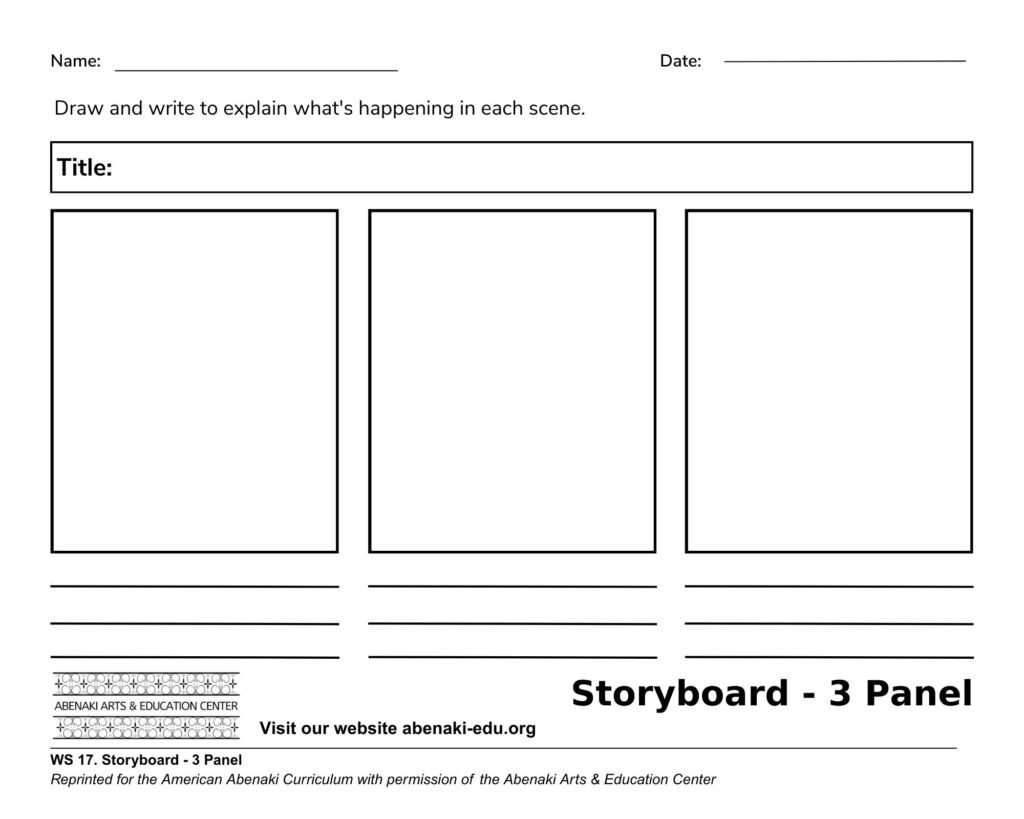
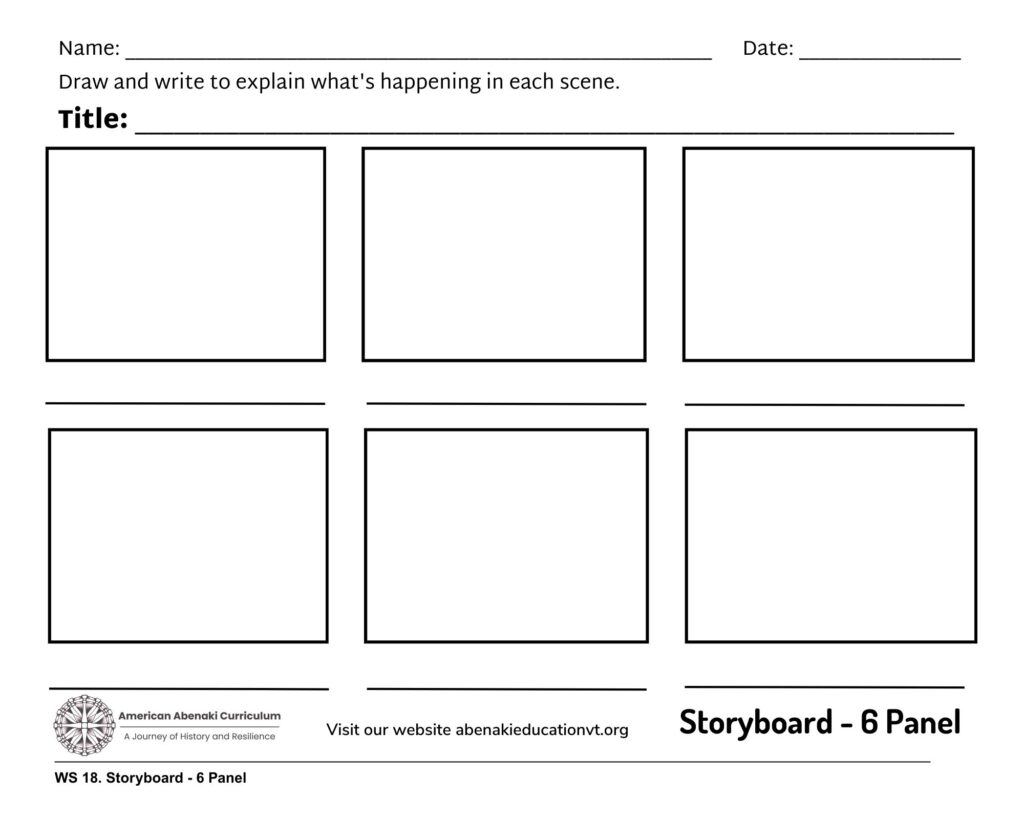
- Hand out art-making materials and worksheets WS 17 and/or WS 18.
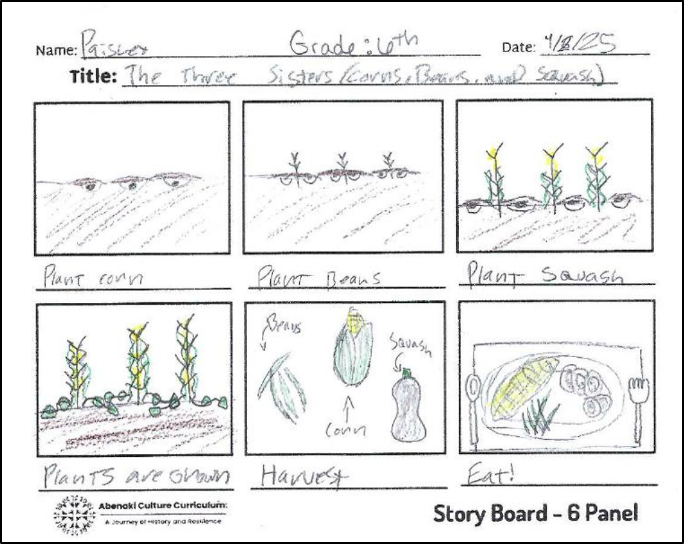
- Ask your students to draw and label scenes about Abenaki lifeways, showing how they have changed over time.
- Share students’ storyboards in a classroom or hallway exhibit.
- These storyboards can later be shared in a student portfolioA collection of student work. Learners select pieces to include in their portfolio to meet a specific purpose. .
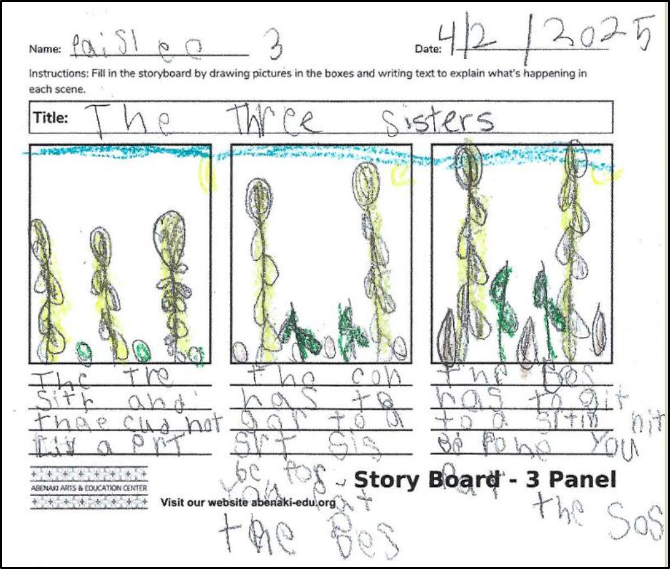
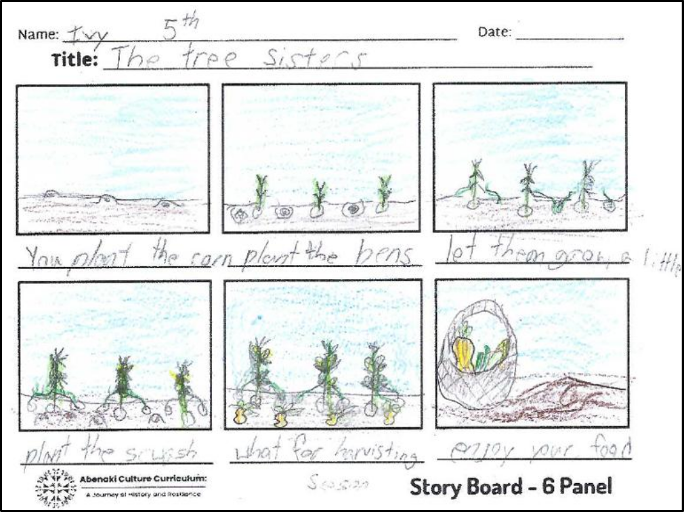
Sample Student Responses (Listed by Grade)
Standards Alignment
Click + to view Standards Alignment guidance. Click – to close the box when done.
Potential Alignment: National Core Arts Standards for Visual Arts
The Visual Arts Integration—Drawing Using Color activity can support the following sampling of standards and serve as a starting point for integrating the American Abenaki Curriculum with visual arts instruction and assessmentA tool to measure what a student knows and can do..
Grade 3
VACr3.1.3a. Elaborate visual information by adding details in an artwork to enhance emerging meaning.
Grade 4
VACr2.3.4a. DocumentTo provide evidence of claims with supporting materials. , describe, and represent regional constructed environments.
Grade 5VACr2.2.5a. Demonstrate quality craftsmanship through care for and use of materials, tools, and equipment.