
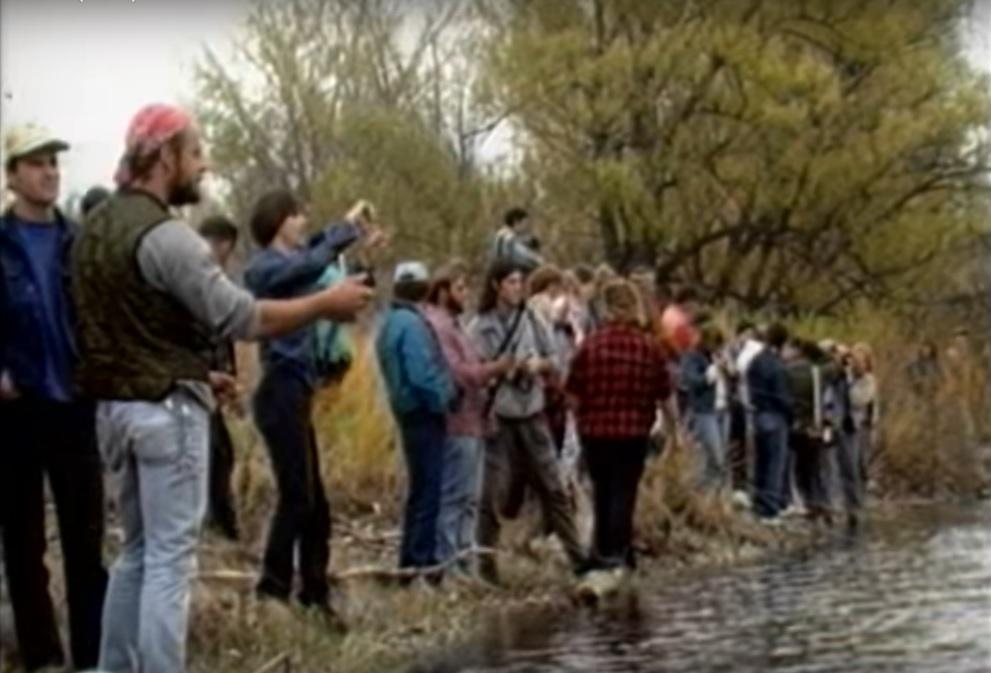
Photos of the fish-in protest may appear blurry or grainy because of limitations of the photography and video technologies that were used at the event in 1987.
In this photo, AbenakiHistorically, this name was used by the French to refer to many different Indigenous communities in Vermont, New Hampshire, and Maine. During the colonial wars, some New England Indians moved to southern Canada as war refugees. They were joined by refugees from other tribes and together became known as Abenaki. (Calloway, 1994) people wearing modern clothing are gathered along the banks of the Missisquoi River in northwestern Vermont during a “Fish-In” event. Some people are taking pictures to documentTo provide evidence of claims with supporting materials. the event, while others are fishing without the fishing licenses that are required by Vermont laws. This event was a form of protest, asserting traditional IndigenousThe first people living in any region, distinct from later arrivals. hunting and fishing rights that had been denied by the State of Vermont. (Note that this photo appears blurry due to the limitations of available photographic technologies at that time.
During these “Fish-Ins,” game wardens issued fines, and Abenaki people went to court to prove their innocence, based on their long-standing use of Aboriginal hunting and fishing practices. For thousands of years, Abenaki communities had been built near lakes and rivers to provide people with easy access to clean water, food, and transportation.
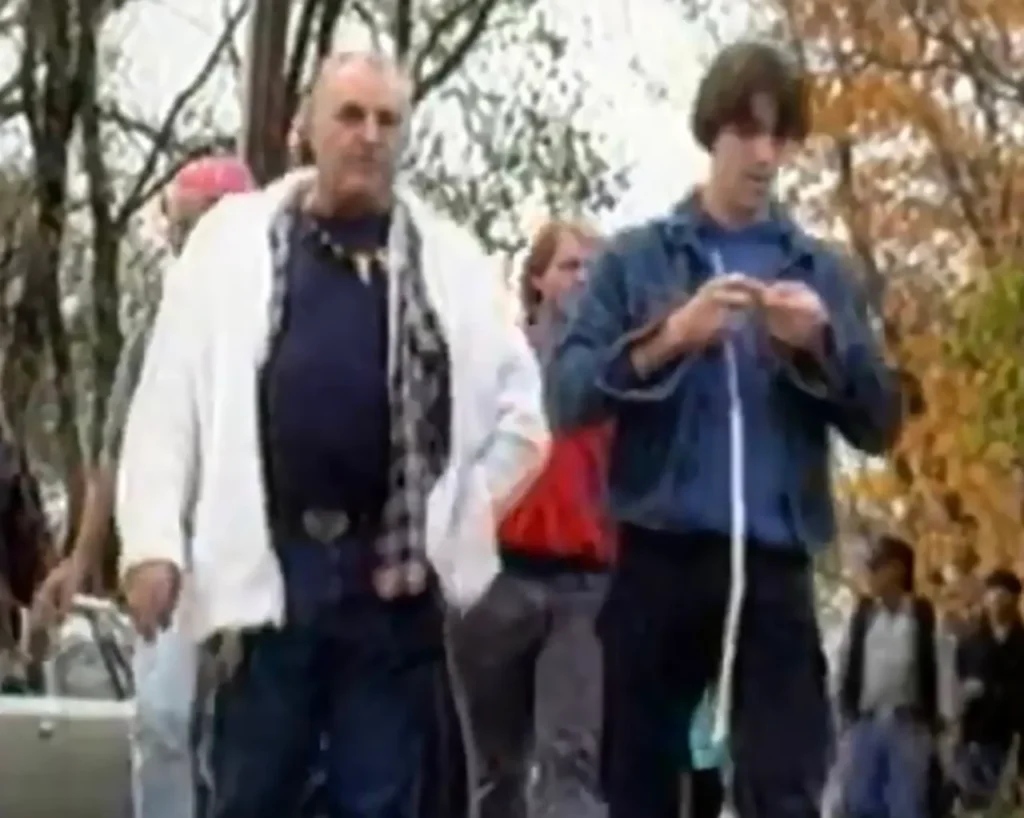
In the 1989 court case State of Vermont v. Harold St. Francis, John Churchill, Homer St. Francis, Judge Joseph Wolchik’s decision overruled the fines. Due to overwhelming evidence proving the Missisquoi Abenaki community has lived at the same location continuously for thousands of years, the judge ruled that they had maintained Aboriginal title over the land and did not need state fishing licenses. While this right to freely fish was acknowledged in 1987, it was not encoded into state law until three decades later. In 2011 and 2012, four Abenaki Tribes were recognized by the State of Vermont after a stringent petition process including a review by scholarly experts. (Bill Status S.222, Act 107, 2010). Finally, in 2020, Governor Phil Scott signed Bill H-716, conferring free hunting, fishing, and trapping licenses to “certified citizens” of Vermont Abenaki Tribes. (H.716, Act 143, 2020).
For More Information
Bruchac, Joseph. (2025). “Vermont Abenaki Fish-ins: Nonviolence and Direct Confrontation.” October 13, 2025. https://joebruchac.com/blog-posts/f/missisquoi-fish-ins.
robinbirkw (Director). (2009, March 14). The Abenakis of Vermont (1987) [Video]. Youtube. https://www.youtube.com/watch?v=3BA5xYC3DLY
The above information comes from the “Deep Roots, Strong Branches” traveling exhibition, Vermont Abenaki Artists Association, curated by Vera Longtoe Sheehan (2025e). Printed with permission of the author. Share as much or as little with your students as needed to successfully complete the curriculum activities.
©2025. Vera Longtoe Sheehan. All Rights Reserved.