
Perseverance over hundreds or thousands of years requires more than resilienceThe ability of people to recover quickly from a difficulty or to adjust easily to change. ; it needs a road map or guiding star. CulturalRelating to the beliefs, language, traditions, and other ways of living that a group shares. values that serve as shared beliefs within a communityA group of people living or working together in a particular area, or people belonging to a cultural group. can help to guide the way forward.
The 1934 book Economy of Abundance challenges the modern economic model based on scarcity and proposes a society where everyone’s basic needs are met (Chase, 1934). Prior to colonization, AbenakiHistorically, this name was used by the French to refer to many different Indigenous communities in Vermont, New Hampshire, and Maine. During the colonial wars, some New England Indians moved to southern Canada as war refugees. They were joined by refugees from other tribes and together became known as Abenaki. (Calloway, 1994) people had access to an abundance of resources. Basic needs for food, clothing, shelterA place or structure that protects people from the weather. were met, not only through hunting, but also through mutual support within extended families, and through gifts and trade among families, friends, and community members. A person could simply trade for what they needed and there was no set price for goods. Even after lands were slowly stolen, access restricted, and resources depleted by colonial settlersPeople who come to a new place to live. , American AbenakiAbenaki tribes, families, and people who live in the United States. Vermont has four recognized Abenaki tribes; for more information visit Abenaki Alliance. people never forgot the importance of shared generosity and reciprocity.
Continued examples of sharing happen today through simple acts, such as sharing hand-me-downs, helping neighbors, and upcycling to make gifts. These activities were very apparent during the COVID pandemic (2020–23) when offers of assistance were made, and when Abenaki people gave to their neighbors whatever was needed (especially if their neighbors were more in need). We see these values reflected in the generosity of children’s groups, such as the “Circle of Courage”, who use donations they receive during the year to make holiday food baskets. Sharing can also be seen in the food banks and pantries of the Koasek, Missisquoi, and Nulhegan Abenaki tribes who feed anyone (even their white neighbors) who happens to be in need.
Sustainable practices are especially embodied in the traditional IndigenousThe first people living in any region, distinct from later arrivals. conceptAn abstract idea, a mental construct, a name, or label that helps people make sense of the world. known as “Seven GenerationsGroups of people born around the same time. In one family, children, parents, and grandparents are from different generations. ”. In her TEDx Talk, “Weaving A Thread through the 7 Generations” (TEDx Talks, 2018), Melody Walker Brook notes, “The center of the Abenaki experience is not ourselves, it is each other…” For the Abenaki, the concept of Seven Generations encompasses all of the generations that “you could possibly know, from your great-grandparents to your great-grandchildren,” with yourself at the center. “When we make a decision we not only have to make a decision for our children but we have to bring our ancestors on our journey with us.” Hopefully, by considering what our great grandparents, grandparents, and parents might advise, and by considering the needs of our children, grandchildren, and great-grandchildren, we can all make better decisions. Some of those decisions might be about how we want others to remember us in the future: how we care for the world, resources, and how “all of my relations” will impact future generations.
“All of my relations” is a phrase used by many Native American communities to refer to the many beings who share the world around us—all people, the land, water, animals, and all things. By considering and respecting all life as being on a par with human life, we are able to think more sustainably about how our needs affect the world around us.
The concept of noninterference is another Native American cultural belief held by many traditional people, including the American Abenaki. In the article “Native American Non-Interference”, Jimm G. Good Tracks explains noninterference to social workers, noting “the less assimilated and acculturated the individual, the more important this principle is to him.” (Good Tracks, 1973) Although his reference was to the field of social work, it can be more broadly applied to education and community relations. From a young age, American Abenaki youth are taught to be respectful and to have consideration for other people. People should be allowed to make their own way in the world without interference. But if you see someone needs help, you should lend a hand so they don’t have to ask for help.
American Abenaki youth also learn how to react to coercion from outside sources, so they do not provoke undue attention from other people or draw them into fights. This may also mean not responding when someone else starts a fight with them. Unfortunately, the practice of noninterference can lead to cross cultural misunderstandings; people from the dominant culture might not understand why American Abenaki people don’t fight back when provoked. Their apparent lack of response reflects a general belief that responding to conflict potentially gives more energy to conflict.Here, it’s important to note that not all Abenaki people are the same. Abenaki people living in different regions or in other countries may have different perspectives about how they remember the past, how they reckon their kinship relations, and how they maintain their cultural identities and practices over time. Like many Indigenous people, traditional Abenaki people believe in the concepts of sovereignty and autonomy. Each individual, each family, and each tribal community is free to govern themselves as they wish, so long as they do not interfere with any other community, or limit anyone else’s freedom.
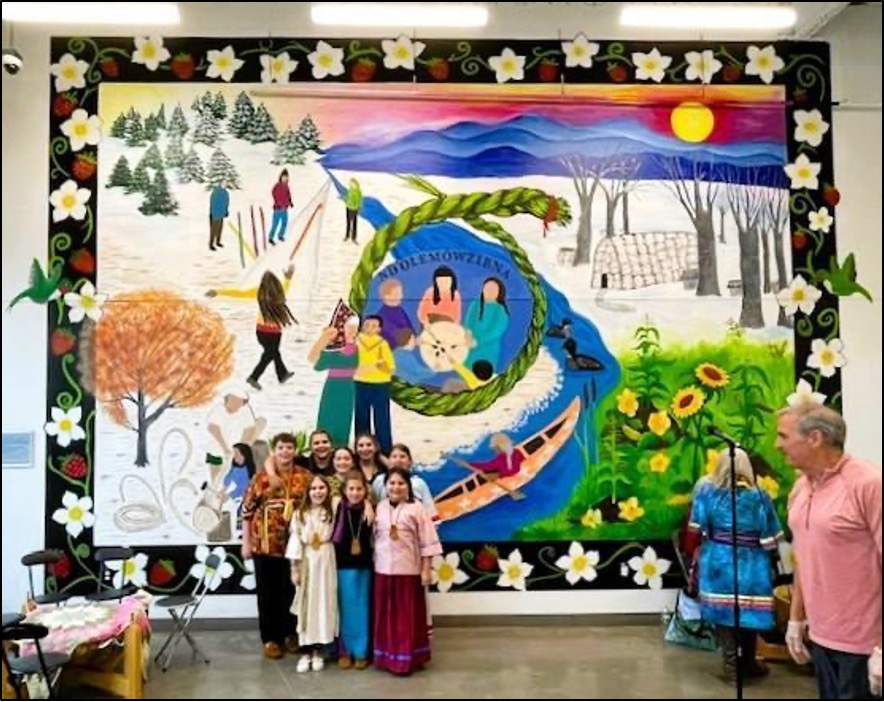
One of the most repetitive themes in Vermont Abenaki cultural beliefsIdeas and values shared by a group. Traditions that are passed from one generation to the next. is that people place a high value on children, because they are our future. Children are one of the most important reasons American Abenaki culture has survived. Many children begin their cultural education almost as soon as they are born. From their parents and grandparents they hear oral traditions. When their parents bring them to cultural events, they learn more from the community around them. Eventually these children will grow up to become parents, grandparents, and possibly Elders. They will be the ones entrusted with preserving cultural traditions and passing them on to future generations.
The above information comes from the “Deep Roots, Strong Branches” traveling exhibition, Vermont Abenaki Artists Association, curated by Vera Longtoe Sheehan (2025e). Printed with permission of the author. Share as much or as little with your students as needed to successfully complete the curriculum activities.
©2025. Vera Longtoe Sheehan. All Rights Reserved.