
Overview
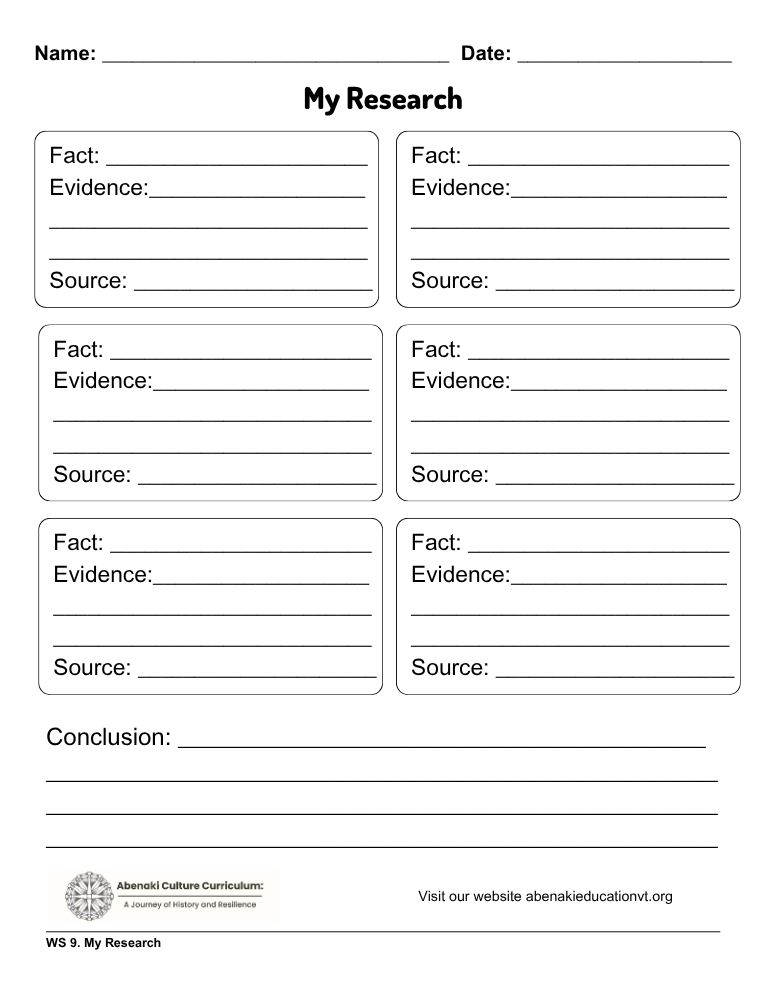
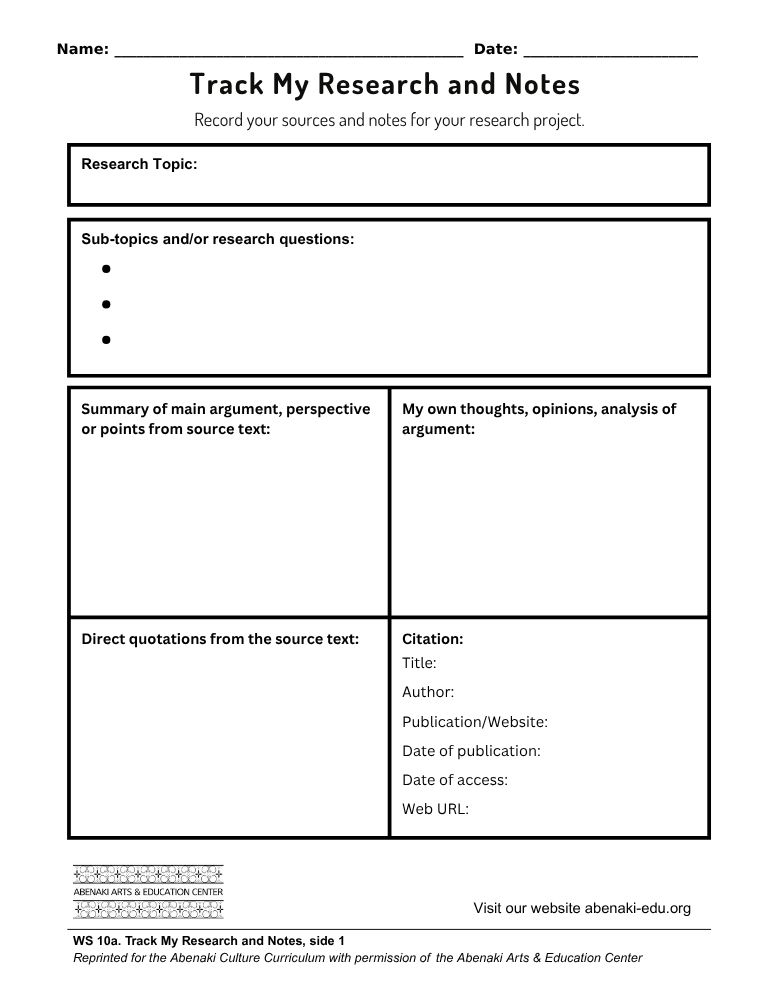
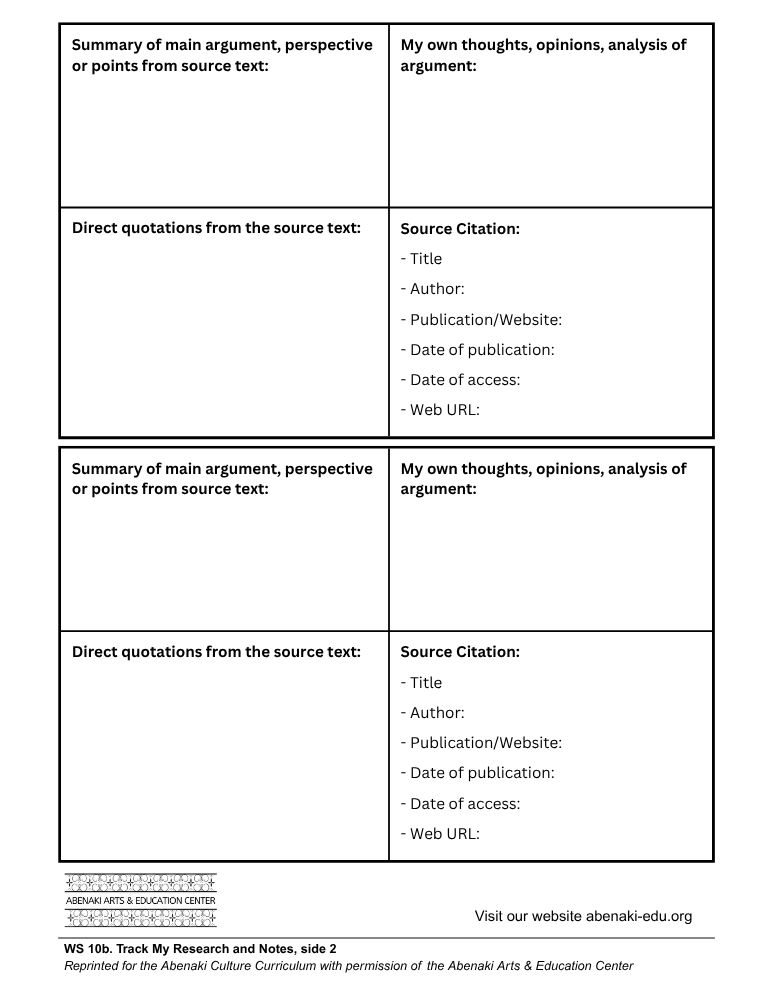
Throughout this curriculum, students have conducted research and recorded evidence about their findings on either the My Research or the Track My Research and Notes worksheets. For this activity, they will prepare for the discussion by gathering and reviewing their evidence and tracking their citations. Then the teacher will facilitate a whole-class debriefing and assembling of the class record, allowing students to share resources they found particularly helpful. For more information, read Tip Sheet – Strategies for Debriefing in the Classroom. (Office of Planning, n.d.)
Worksheets
Resources
Review and choose appropriate resources for your students from the ResourceA source of information for student learning, such as a website, video, library book, poster, or map. Bank.
Guiding the Inquiry
- In advance, determine the length of time allotted to research and discussion; prepare a list of debriefing questions; choose resources; and decide how you will create a class record.
- Explain to students your expectations for independent research to answer Supporting QuestionFrom the Inquiry Design Model (IDM) At a Glance: “Supporting questions are intended to contribute knowledge and insights to the inquiry behind a compelling question. Supporting questions focus on descriptions, definitions, and processes about which there is general agreement within the social studies disciplines, which will assist students to construct explanations that advance the inquiry. Typically, there are 3–4 supporting questions that help to scaffold the compelling question. Example: What were the political changes that resulted from the American Revolution?” (Grant et al., 2014) 3, including the time allotted and other assignment details. Point out that they may refer to their completed “Track My Research and Notes” or “My Research” worksheets from earlier activities to get started.
- Provide the research resources you chose to the class, including those that students would like to see again after reviewing previously completed tracking resources worksheets.
- Hand out blank worksheets WS 9. My Research or WS 10a–b. Track My Research and Notes and scaffold their use as needed as students use the resources.
- Hold a whole class debriefA learning activity in which a group (small or whole) shares what they learned from an experience. A debrief can help learners reflect, make connections, and prepare to demonstrate what they know and can do. session to allow students to share their claims and evidence related to Supporting Question 3. Have students verbally cite their sources from their tracker sheets.
- During the debrief, facilitate class discussion with questions such as “Can you provide more details about that?” “So what?” “Now what?” and encourage students to ask questions and elaborate on what others say.
- Bring the discussion to a meaningful close by summarizing and making connections for a broader understanding of AbenakiHistorically, this name was used by the French to refer to many different Indigenous communities in Vermont, New Hampshire, and Maine. During the colonial wars, some New England Indians moved to southern Canada as war refugees. They were joined by refugees from other tribes and together became known as Abenaki. (Calloway, 1994) culture.
- Assemble a class record of student’s responses to Supporting Question 3 such that the record can be shared inside and outside your classroom.
Sample Student Response
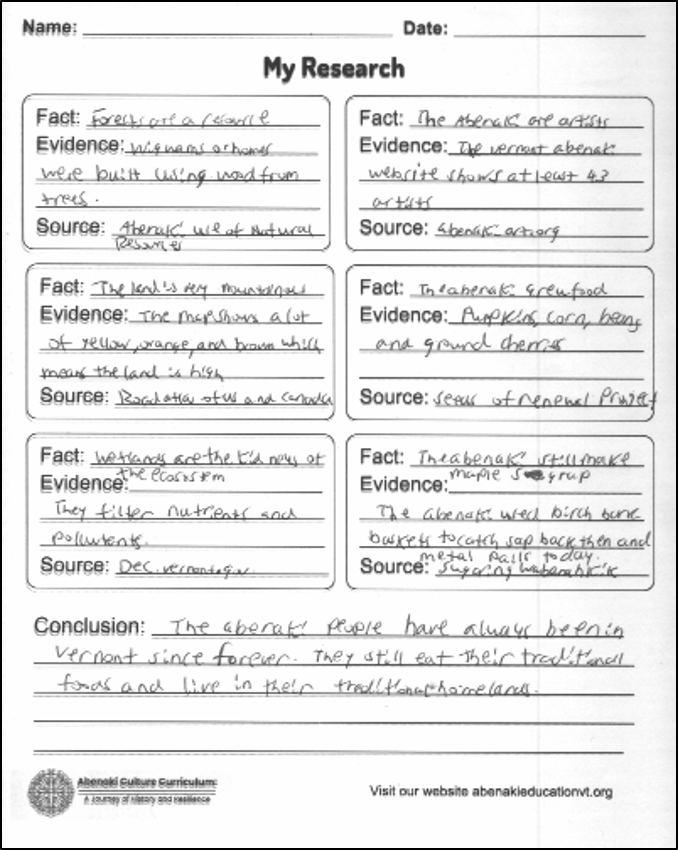
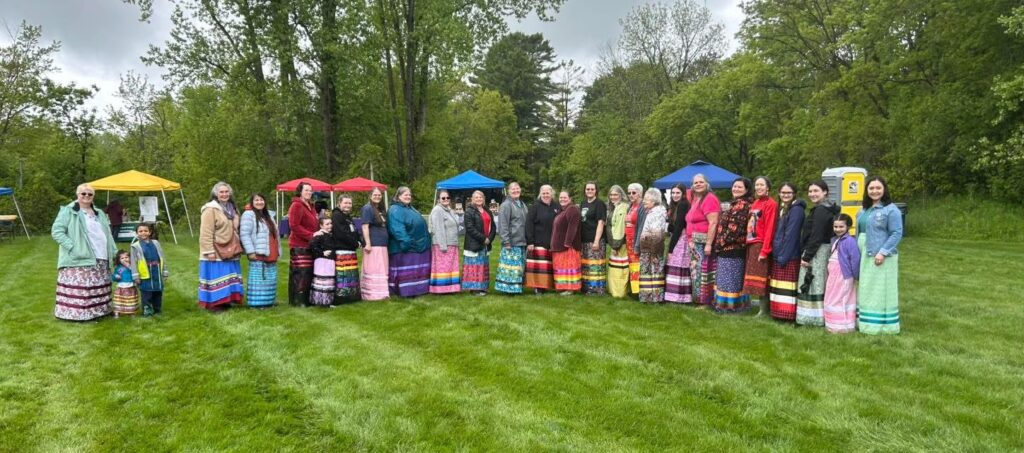
The Class Debriefs and Record activity can support the following sampling of standards and serve as a starting point for integrating the American AbenakiAbenaki tribes, families, and people who live in the United States. Vermont has four recognized Abenaki tribes; for more information visit Abenaki Alliance. Curriculum with language arts instruction and assessmentA tool to measure what a student knows and can do..
Standards Alignment
Click + to view Standards Alignment guidance. Click – to close the box when done.
Potential Alignment: National Core Arts English Language Arts
Grades 3–5
CCSS.ELA-Literacy.SL.3.1.a. Come to discussions prepared, having read or studied required material; explicitly draw on that preparation and other information known about the topic to explore ideas under discussion.
CCSS.ELA-Literacy.SL.4.1.b. Follow agreed-upon rules for discussions and carry out assigned roles.
Grades 6–8
CCSS.ELA-Literacy.SL.5.1.c. Pose and respond to specific questions by making comments that contribute to the discussion and elaborate on the remarks of others.
CCSS.ELA-Literacy.SL.6.1. Engage effectively in a range of collaborative discussions (one-on-one, in groups, and teacher-led) with diverse partners on grade 6 topics, texts, and issues, building on others’ ideas and expressing their own clearly.
CCSS.ELA-Literacy.SL.7.2. Analyze the main ideas and supporting details presented in diverse media and formats (e.g., visually, quantitatively, orally) and explain how the ideas clarify a topic, text, or issue under study.
CCSS.ELA-Literacy.W.8.9. Draw evidence from literary or informational texts to support analysis, reflection, and research.
Grades 9–12
CCSS.ELA-Literacy.SL.9-10.1.a. Come to discussions prepared, having read and researched material under study; explicitly draw on that preparation by referring to evidence from texts and other research on the topic or issue to stimulate a thoughtful, well-reasoned exchange of ideas.
CCSS.ELA-Literacy.RI.11-12.7. Integrate and evaluate multiple sources of information presented in different media or formats (e.g., visually, quantitatively) as well as in words in order to address a question or solve a problem.