Prompt, Resources, and Sample Student Responses
Prompt:
List ways the Abenaki people adapted their lifeways to their changing environment.
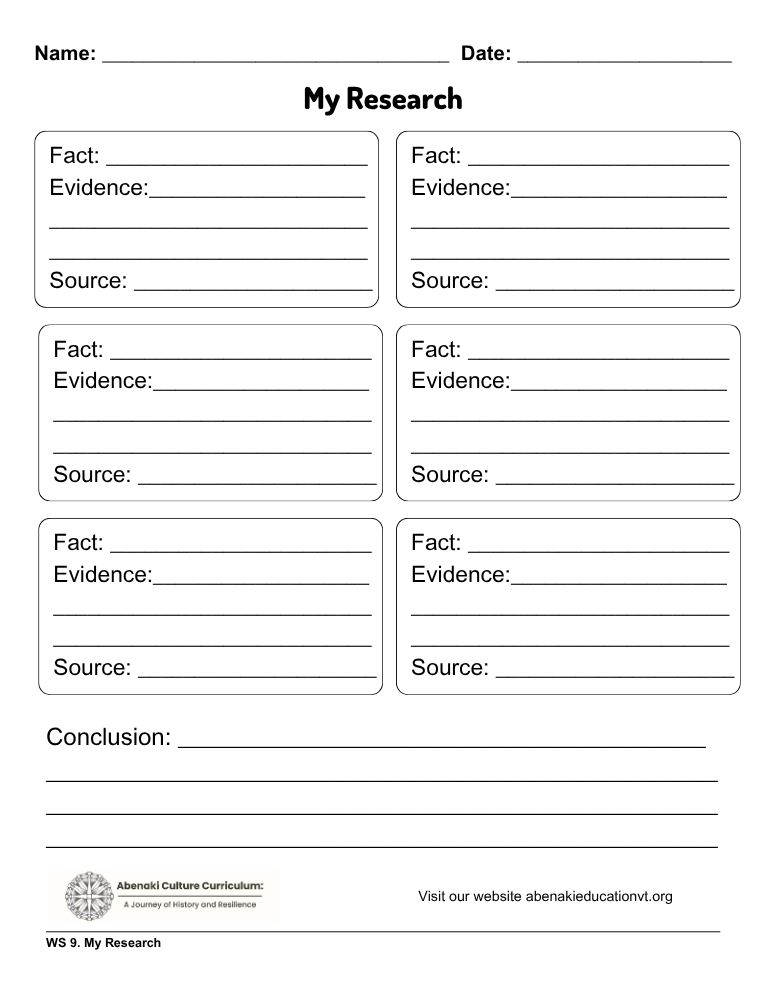
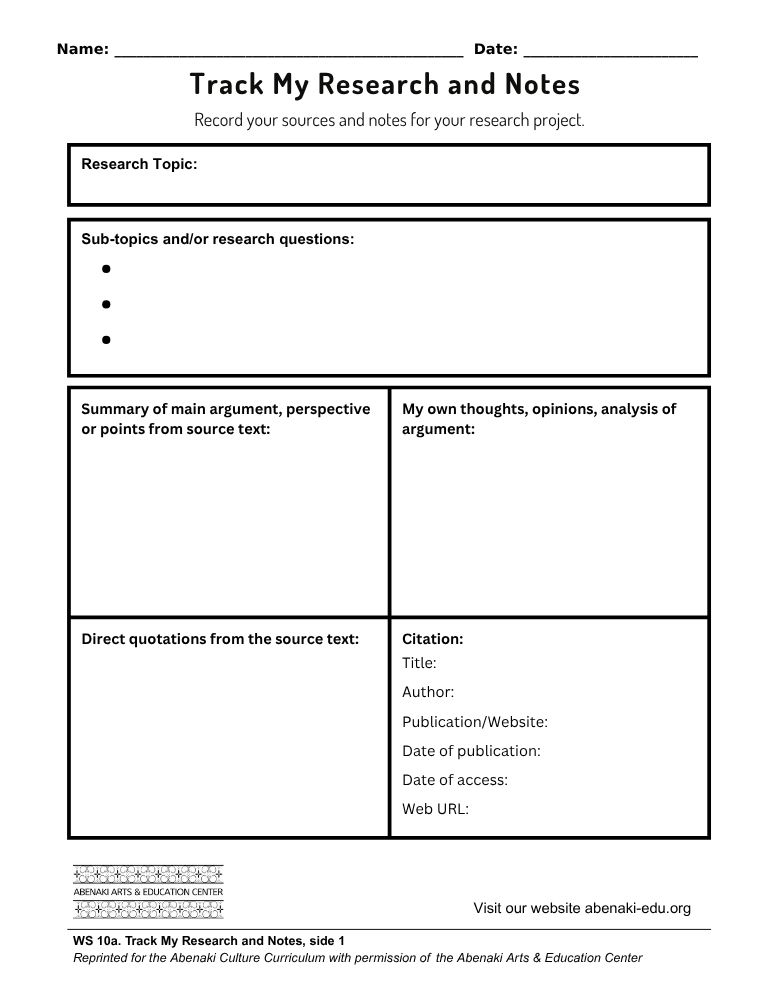
Worksheet
- Abenaki History Timeline [Poster] (Abenaki Arts & Education Center, 2023)
- [Resource coming soon]
- [Resource coming soon]
- Aunt Sarah: Woman of the Dawnland: The 108 Winters of an Abenaki Healing Woman [Book—275 pages] (Parker, 1994)
- Daily Life of the Koasek Abenaki from A Brief History: From Koasek Meadows to You Today [Booklet—see pages 7-10] (Koasek Traditional Band of the Koas Abenaki Nation, n.d.-a)
- Historic Map of New France [document cartographique/map] (Champlain, 1612)
Sample Student Responses
Food
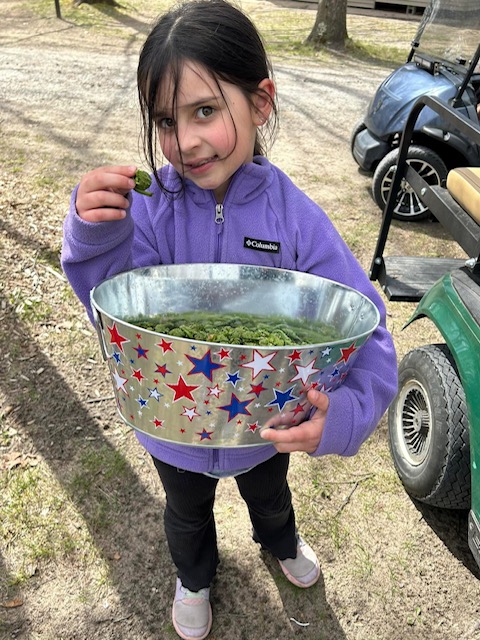
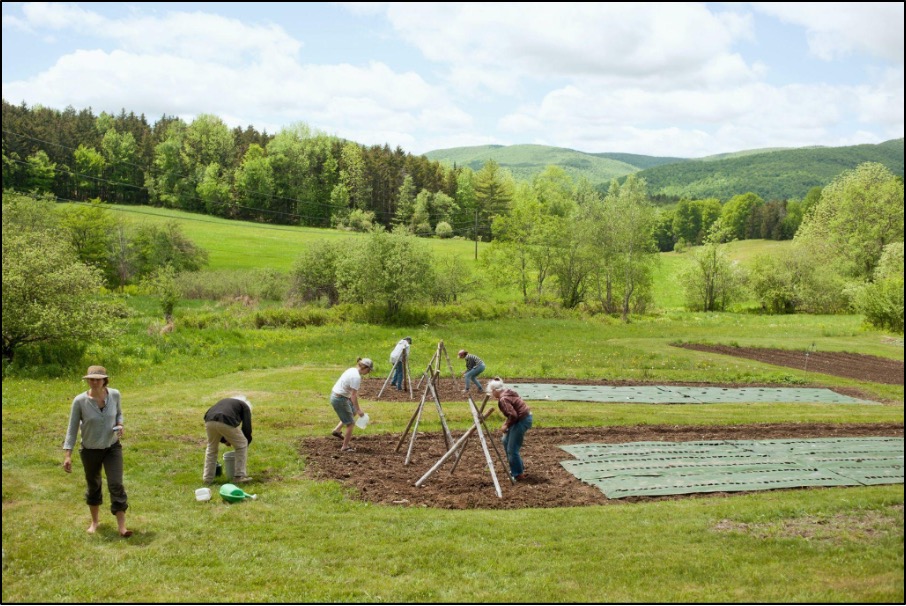
- Abenaki people cultivated plants such as Jerusalem artichokes in fields, so they produce more tubers.
- Abenaki people created new varieties of corn, beans, and squash.
- New hunting and fishing techniques were developed.
- Abenaki people began raising livestock.
- Abenaki people adopted firearms for hunting.
Clothing
- Materials vary greatly over time.
- Trade fabrics such as wool and linen were adopted quickly, nearly replacing leather skirts, breechclouts, and leggings.
- Hoods protected the wearer from pests and inclement weather.
- The use of beadwork on clothing continued long after Abenaki people adopted the practice of wearing European style clothing.
Shelter
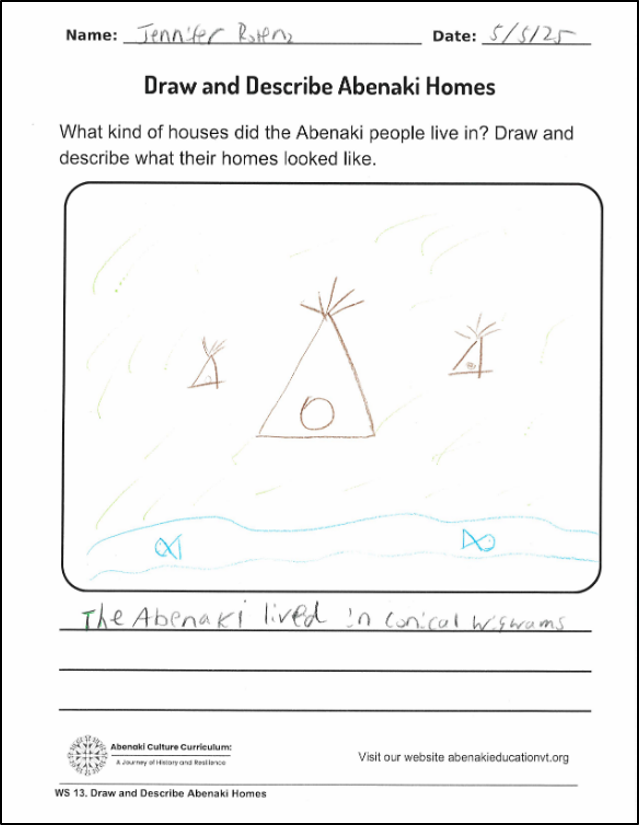
- As new materials and tools became available, architecture changed.
- Shelters were adapted to differing circumstances (location, group size, materials, and intended length of occupation).
- Most Abenaki people today live in houses or apartments.
Art
- Plant fiber weaving was used for clothes, bags, and to imprint designs on pottery.
- Beadwork became more intricate when metal needles and small glass beads were introduced.
- Abenaki people who traveled from place to place made artwork that they could wear or carry, like clothing, jewelry, and bags.
- There are many living Abenaki artists.
See Historical Context essay and Resources for possible additional responses.

Standards Alignment
Click + to view Standards Alignment guidance. Click – to close the box when done.
Potential Alignment: English Language Arts Standards
The Give One, Get One activity can support the following sampling of standards and serve as a starting point for integrating the American Abenaki Curriculum with language arts instruction and assessment.
Grades 3–5
CCSS.ELA-Literacy.SL.3.1.c. Ask questions to check understanding of information presented, stay on topic, and link their comments to the remarks of others.
CCSS.ELA-Literacy.SL.4.1.d. Review the key ideas expressed and explain their own ideas and understanding in light of the discussion.
CCSS.ELA-Literacy.SL.5.1.b. Follow agreed-upon rules for discussions and carry out assigned roles.
Grades 6–8
CCSS.ELA-Literacy.SL.6.1. Engage effectively in a range of collaborative discussions (one-on-one, in groups, and teacher-led) with diverse partners on grade 6 topics, texts, and issues, building on others’ ideas and expressing their own clearly.
CCSS.ELA-Literacy.L.7.3. Use knowledge of language and its conventions when writing, speaking, reading, or listening.
CCSS.ELA-Literacy.W.8.7. Conduct short research projects to answer a question (including a self-generated question), drawing on several sources and generating additional related, focused questions that allow for multiple avenues of exploration.
Grades 9–12
CCSS.ELA-Literacy.W.9-10.9. Draw evidence from literary or informational texts to support analysis, reflection, and research.
CCSS.ELA-Literacy.SL.11-12.4. Present information, findings, and supporting evidence, conveying a clear and distinct perspective, such that listeners can follow the line of reasoning, alternative or opposing perspectives are addressed, and the organization, development, substance, and style are appropriate to purpose, audience, and a range of formal and informal tasks.